Your gut microbiome — the 38 trillion bacteria living in your digestive tract — influences your mood, immunity, weight, skin, and cognitive performance more than any single organ in your body. And the most powerful thing you can do to improve it costs less than any supplement: eat a wider variety of plant foods. Here is exactly how to do that.
Why Gut Health Actually Matters
The gut-brain axis is a bidirectional communication network between your gastrointestinal tract and your central nervous system. About 95% of your body's serotonin — the neurotransmitter most associated with mood regulation — is produced in your gut, not your brain. When your gut microbiome is disrupted, serotonin production drops. This is one reason why poor diet is consistently linked to higher rates of depression and anxiety in large epidemiological studies.
A 2022 study in Cell found that a high-fiber, plant-diverse diet increased microbiome diversity more effectively than a fermented food diet alone — and microbiome diversity is the primary marker researchers use to assess gut health. More species of bacteria, performing more functions, equals a more resilient, better-functioning system.
Research from the American Gut Project found that people who ate 30 or more different plant foods per week had significantly more diverse gut microbiomes than those who ate 10 or fewer. "Plants" includes vegetables, fruits, whole grains, legumes, nuts, seeds, herbs, and spices. A sprinkle of cumin counts as a plant. The target is variety, not volume.
The Four Categories of Gut-Healing Plant Foods
1. Prebiotic Foods — Feed Your Good Bacteria
Prebiotics are non-digestible fibers that selectively feed beneficial bacteria in your colon. Unlike probiotics (live bacteria), prebiotics are the food that allows those bacteria to thrive. The most research-backed prebiotic foods are garlic, onions, leeks, asparagus, Jerusalem artichokes, bananas (slightly underripe), oats, and chicory root.
The practical approach: add at least one prebiotic food to every meal. A clove of garlic in your olive oil. Sliced banana on your oats. Asparagus roasted alongside your dinner vegetables. These are small additions that compound significantly over weeks.
2. Fermented Plant Foods — Add Live Cultures
Fermented foods contain live microorganisms that directly colonize your gut. The most accessible fermented plant foods for Americans are kimchi, sauerkraut, kombucha, water kefir, miso, and tempeh. Not all fermented foods in grocery stores contain live cultures — look for "live and active cultures" on the label, and avoid products that have been heat-treated after fermentation (which kills the bacteria).
Start with small amounts if you're not used to fermented foods — 2 tablespoons of sauerkraut with a meal is enough to begin. Larger amounts can cause bloating as your gut adjusts. Build up gradually over 2–3 weeks.
Kimchi is arguably the most studied fermented food for gut health. A 2021 randomized controlled trial at Stanford found that a high-fermented-food diet (including kimchi) increased microbiome diversity and decreased inflammatory markers including IL-6 and IL-12p70 — markers associated with chronic disease risk. Kimchi is available in most American grocery stores and increasingly in mainstream supermarkets.
3. High-Fiber Vegetables — Build Microbial Abundance
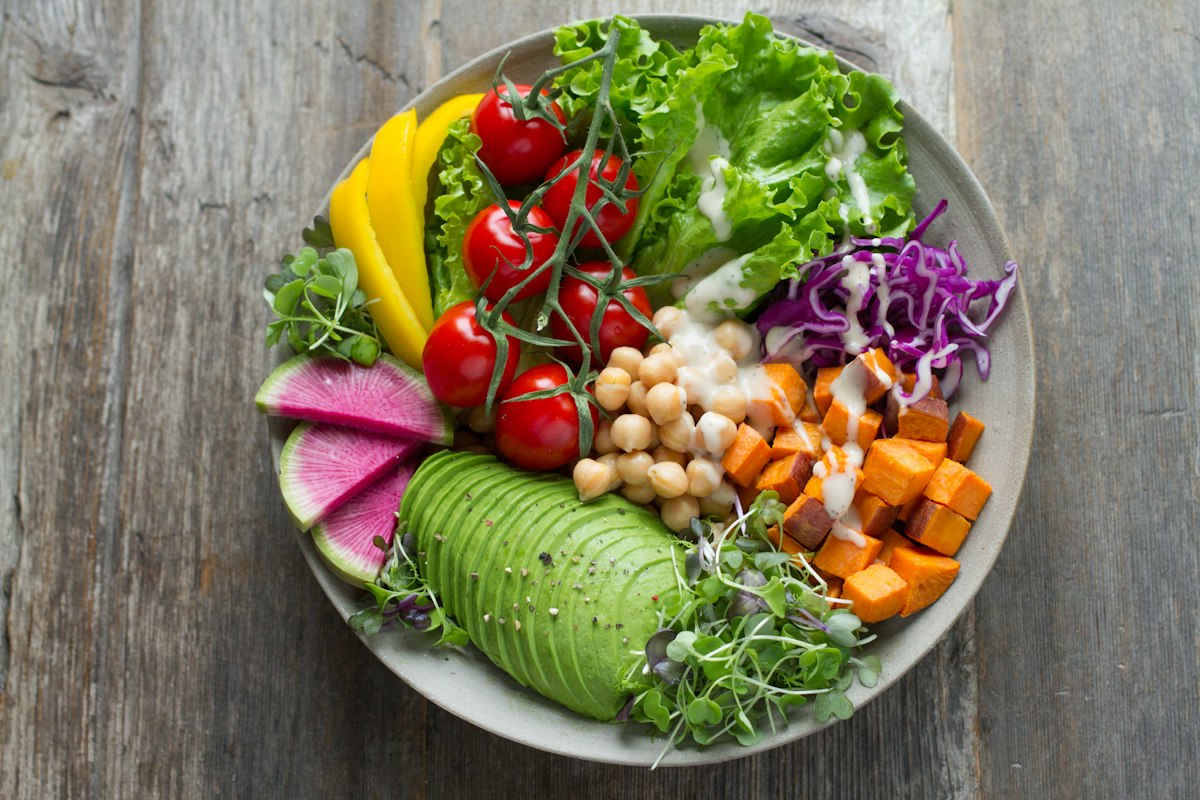
The bacteria in your gut that produce short-chain fatty acids (SCFAs) — particularly butyrate, the primary fuel for your colon cells — require fermentable fiber. The best sources are legumes (lentils, black beans, chickpeas), cruciferous vegetables (broccoli, cauliflower, Brussels sprouts), root vegetables (sweet potato, carrots, beets), and leafy greens (spinach, kale, arugula).
The typical American diet contains 10–15 grams of fiber per day. The recommended amount is 25–38 grams. That gap is the single biggest dietary driver of poor gut health in the United States. Closing it doesn't require dramatic dietary overhaul — it requires adding a cup of beans, a serving of roasted vegetables, and a piece of fruit to your daily meals.
4. Polyphenol-Rich Foods — Reduce Gut Inflammation
Polyphenols are plant compounds that act as antioxidants and also selectively promote the growth of beneficial bacteria. The most polyphenol-dense plant foods available in American supermarkets are blueberries, dark cherries, pomegranate, green tea, extra-virgin olive oil, dark chocolate (85%+), walnuts, and coffee.
Extra-virgin olive oil deserves specific mention. A 2019 study found that daily consumption of EVOO significantly increased the population of Lactobacillus and Bifidobacterium in the gut — the same beneficial bacteria targeted by most probiotic supplements. At a fraction of the cost.
A Practical Week of Gut-Focused Eating
You don't need a meal plan — you need a framework. Each day, aim to include: one fermented food, one prebiotic food, one legume serving, at least three different vegetables, and one polyphenol-rich food. That's five categories across the day. Some meals will hit multiple categories at once. A lentil soup with garlic, onion, and a side of sauerkraut covers four categories in one meal.
The most common obstacle isn't knowledge — it's habit. The easiest intervention: keep sauerkraut and kimchi in your refrigerator and add a tablespoon to whatever you're already eating. Keep frozen edamame and mixed berries in your freezer. Keep canned lentils and chickpeas in your pantry. These four items alone can transform the fiber and fermented food content of your existing diet without changing what you cook.
Measurable changes in microbiome diversity can occur within 2 weeks of consistent dietary change. Subjective improvements — better digestion, more stable energy, improved mood — are typically reported within 3–4 weeks. The gut microbiome is remarkably responsive to dietary input in both directions. What you consistently eat shapes it; what you consistently stop eating also shapes it.
Supplements vs. Food
Probiotic supplements have limited evidence for gut health in people without specific conditions. The strains in most supplements are chosen for their ability to survive manufacturing, not for their demonstrated impact on human gut diversity. Whole food sources of probiotics and prebiotics consistently outperform supplements in head-to-head research — and they contain hundreds of other compounds that work synergistically in ways that isolated strains do not.
If you're considering probiotic supplements, they have the strongest evidence for two specific conditions: antibiotic-associated diarrhea (where they demonstrably reduce incidence) and IBS (where certain strains show consistent benefit). For general gut health optimization, the evidence favors food over supplements by a wide margin.